Can You Convert a Flat Above a Shop Into an HMO or Separate Residential Use?
A flat above a shop can look like an attractive opportunity for a landlord or property investor. It may already have a separate entrance, it may sit above an existing commercial unit, and it may appear suitable for shared accommodation or conversion into a more valuable residential layout. However, converting a flat above a shop into an HMO or a different form of residential use is rarely just a matter of rearranging rooms. Planning use, access, fire safety, amenity, noise, servicing, licensing and Building Control all need to be considered before the project is taken too far.
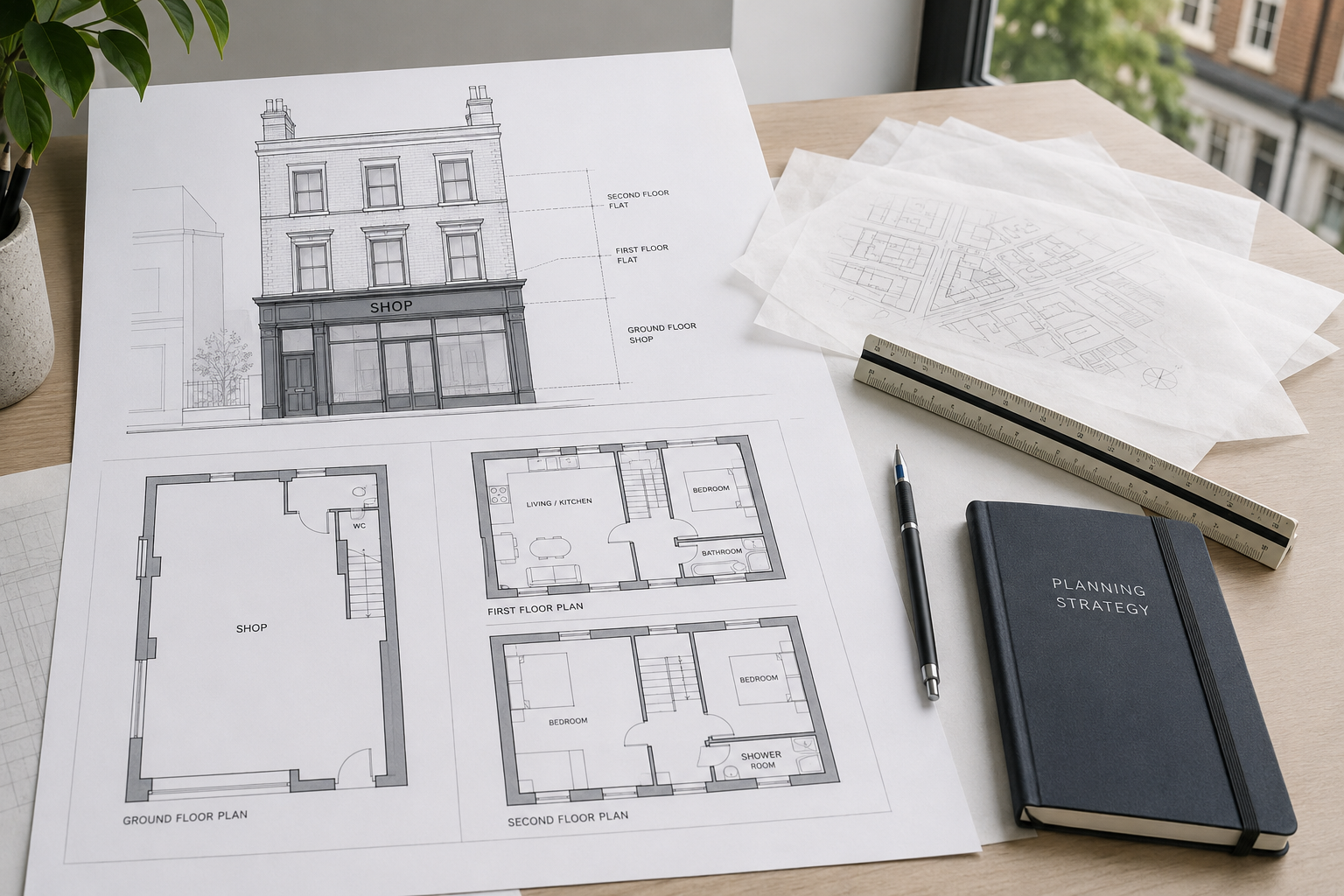
Many mixed-use buildings in London have commercial space at ground floor level with residential accommodation above. Sometimes the upper floors are underused, poorly laid out or no longer suitable for the owner’s plans. In other cases, a landlord may want to convert an existing flat into an HMO, add rooms in the roof, or change how the commercial and residential parts of the building work together.
The first question is usually: can this be done?
The answer is often: possibly, but only after the planning position and the building constraints have been checked carefully.
A flat above a shop may already be a self-contained dwelling, usually falling within residential Use Class C3. A small HMO, generally occupied by three to six unrelated people sharing facilities such as a kitchen or bathroom, is normally treated as Use Class C4. Larger HMOs with more than six occupiers are usually treated as sui generis, meaning they sit outside the standard use classes and are likely to need planning permission for a change of use.
In some areas, a change from a normal dwelling to a small HMO may be permitted development. However, that right can be removed by an Article 4 Direction. For example, Merton has removed permitted development rights across the borough for changes from C3 dwellinghouses to C4 HMOs, meaning planning permission is required for that type of conversion in Merton. This is why it is important to check the exact borough and property before assuming that a flat can simply become an HMO.
Planning permission and HMO licensing are also separate. HMO licensing deals with the management and safety standards of the rented accommodation. In England, mandatory licensing generally applies where five or more people from more than one household share facilities, although councils may also operate additional licensing schemes for smaller HMOs. Planning permission deals with whether the proposed use and physical changes are acceptable in planning terms. A project may need both.
When a flat sits above a shop, the planning issues can be more complicated than with a normal house. The council may look at the existing lawful use of the ground floor and upper floors, the access to the residential accommodation, the impact on neighbours, the effect on the commercial unit, waste storage, cycle storage, outlook, daylight and whether the proposal would create acceptable living conditions for future occupiers.
The internal layout is one of the most important parts of the project. It is not enough to fit bedrooms onto a plan. A good HMO or flat conversion layout should test whether rooms are genuinely usable, whether shared kitchen and living areas are adequate, whether circulation is clear, whether bathrooms are sensibly located, and whether furniture can be placed without creating awkward or unsafe spaces.
Fire safety is another major consideration. Flats above shops often involve different uses within the same building, and the separation between the commercial and residential parts can be critical. Escape routes, protected stairs, fire doors, compartmentation, service penetrations, ventilation routes and access for maintenance may all need careful coordination. These matters are usually dealt with through Building Regulations, but they should be considered early because they can affect the planning layout.
Access is also important. A separate residential entrance is often preferable, but not every building has one. If access to the flat is shared with the shop, runs through commercial space, or is narrow and difficult to adapt, this can create both practical and regulatory problems. The design should be checked before relying on the property as a viable conversion opportunity.
Physical changes may also require planning permission in their own right. For example, adding a dormer, changing the roof, altering windows, changing the shopfront, adding external stairs or changing the appearance of the building may all require planning assessment. Even where the change of use itself is possible, the physical works may still need approval.
For separate residential use, rather than an HMO, the key question is what is being separated or created. If the project involves converting unused upper floors into a new flat, dividing one flat into two flats, changing part of a commercial building into residential use, or creating a new access arrangement, the planning route will need to be reviewed carefully. Councils will usually want to understand the existing use, proposed use, quality of accommodation, impact on the commercial premises, and whether the building can support the new arrangement.
Before buying a property or starting design work, it is sensible to carry out an early feasibility review. This should normally include checking the planning history, existing lawful use, local Article 4 restrictions, HMO licensing position, access, fire strategy, waste storage, daylight, room sizes, roof potential and whether additional consultants may be needed.
At Gartwork Architecture, we help landlords, property owners and developers test these issues before they commit to a layout or application. For mixed-use and HMO projects, our work can include existing drawings, layout options, furniture and space planning, planning strategy, architectural drawings, planning documents, application submission and coordination with other consultants where needed.
The safest approach is not to ask only, “Can I fit more rooms into this flat?” A better question is: can this building lawfully, safely and practically support the proposed use?
If you are considering converting a flat above a shop into an HMO or separate residential accommodation, early advice can help you understand the risks, avoid wasted design work and make a stronger planning application.
Categories
HMO
Flat Conversion
Mixed-Use Property
Planning Permission
Change of Use
Landlords
Property Developers
Flats Above Shops
Building Regulations
South West London
Architecture
Merton