Replacing Windows in a Conservation Area or Listed Building
Replacing windows in a conservation area or listed building can be more complicated than a standard home improvement project. In many ordinary houses, replacing windows with similar-looking units may not need planning permission. However, additional restrictions can apply in conservation areas, Article 4 areas and listed buildings. For listed buildings, works that affect the character of the building as a building of special architectural or historic interest require listed building consent, and this can apply to internal and external fabric.
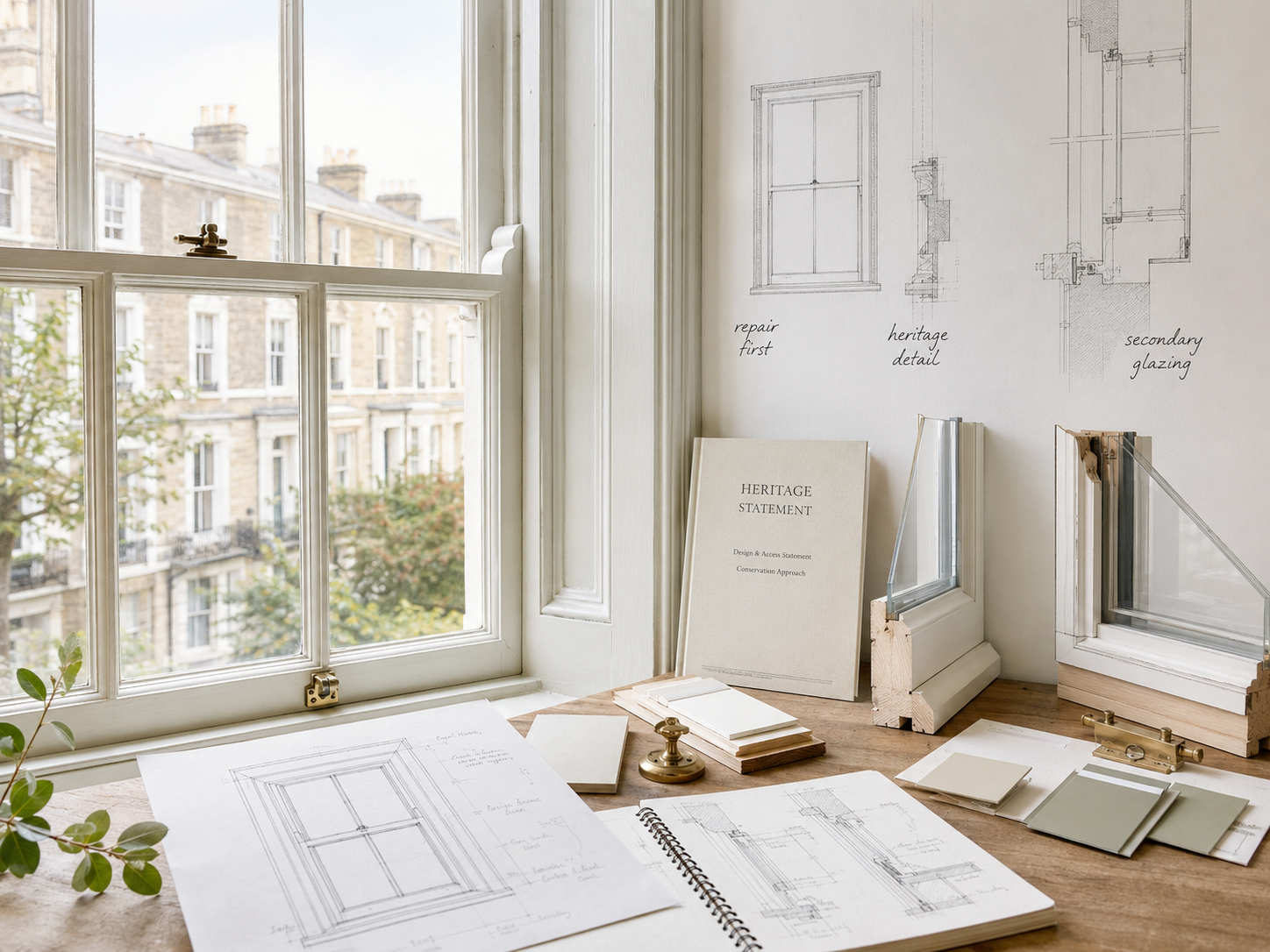
The short answer
If your property is listed, you should assume that replacing windows may need listed building consent.
If your property is in a conservation area, you should check whether planning permission is required, especially if the windows are on a visible elevation, the design is changing, the building is a flat, or an Article 4 Direction removes permitted development rights.
For a normal, unlisted house outside a restricted area, the Planning Portal says planning permission is not usually needed for repairs, maintenance, minor improvements or new windows and doors that are of similar appearance to those used in the construction of the house. It also notes that internal secondary glazing does not usually need planning permission.
However, heritage properties are different. The key question is not just “will the new windows fit?” The key question is “will the change preserve the character and significance of the building or area?”
Why windows matter in heritage buildings
Windows are one of the most important parts of a historic building’s character. They affect the rhythm of the elevation, the age and status of the building, the depth of reveals, the relationship between solid wall and glass, and the fine detail of glazing bars, horns, meeting rails, frames and sashes.
Historic England explains that windows add character through their design, materials and workmanship. It also says older windows, if repaired and adapted, can be as energy efficient as new ones.
This is why conservation officers often look closely at window replacement proposals. A new window may appear similar from a distance, but small differences can change the character of the building, including:
- thicker glazing bars;
- different frame depth;
- loss of historic glass;
- different opening method;
- false glazing bars inside a sealed unit;
- changed sash proportions;
- loss of timber details;
- different paint finish;
- visible trickle vents;
- different external cills or horns;
- altered reveal depth.
For a listed building or sensitive conservation area, these details can decide whether the proposal is acceptable.
Conservation area or listed building: what is the difference?
A conservation area is an area designated because of its special architectural or historic interest, where it is desirable to preserve or enhance character or appearance. GOV.UK confirms that conservation areas are normally designated by local planning authorities.
A listed building is a specific building designated because of its special architectural or historic interest. GOV.UK explains that, unless the list entry says otherwise, listing covers the entire building, internally and externally, and may also cover fixed objects and some curtilage structures.
This means the approval route can be different:
- In a conservation area, the issue is usually planning permission and whether the new windows preserve or enhance the area’s character.
- In a listed building, the issue is listed building consent and whether the works affect the building’s special architectural or historic interest.
- In some cases, both planning permission and listed building consent may be needed.
Do you need planning permission in a conservation area?
Sometimes yes, sometimes no.
For many houses, window replacement can fall within permitted development if the new windows are of similar appearance to the existing or original windows. However, the Planning Portal warns that additional local rules may apply and that Article 4 Directions can remove permitted development rights. It also says designated areas, including conservation areas, may have additional restrictions.
Planning permission is more likely to be needed where:
- the building is in a conservation area with an Article 4 Direction;
- the windows are on a front or publicly visible elevation;
- the design, material or opening style is changing;
- timber sash windows are being replaced with uPVC or aluminium;
- a flat is involved rather than a single dwellinghouse;
- the building is locally listed or makes a positive contribution to the conservation area;
- the replacement affects the character of a terrace or group of buildings;
- the proposal includes new openings, bay windows or altered proportions.
The safest first step is to check the local council’s conservation area guidance, Article 4 map and planning history before ordering windows.
Do you need listed building consent?
If the building is listed, you are likely to need listed building consent for window replacement unless the works are genuinely minor and do not affect the building’s character.
GOV.UK states that any works to demolish, alter or extend a listed building in a way that affects its character as a building of special architectural or historic interest require listed building consent, regardless of whether planning permission is also required. Carrying out such works without consent is a criminal offence.
Window replacement in a listed building can affect character because windows are often part of the building’s historic fabric, design and craftsmanship. Even where windows are not original, they may still be significant if they belong to an important later phase of the building.
Repair or replace?
For historic windows, repair is often the preferred starting point.
Historic England says repair is usually better than replacement because it normally costs less, preserves character and historic fabric, usually does not need consent, is more environmentally sustainable and can last longer than modern replacements when carried out by skilled joiners using suitable materials. It says complete replacement should be a last resort, for example where windows are beyond repair.
This does not mean replacement is never possible. It means the application should usually explain why repair is not enough.
A good assessment should consider:
- Are the frames original or later replacements?
- Is the timber genuinely beyond repair, or only locally decayed?
- Can sashes be repaired while retaining the box frame?
- Is historic glass present?
- Are the glazing bars, horns or mouldings significant?
- Are the windows part of a matching terrace or façade?
- Could draught-proofing, overhaul or secondary glazing solve the problem?
- Is full replacement proportionate?
In heritage work, “old” does not automatically mean “must be retained”, but “inconvenient” does not automatically justify replacement.
What if the existing windows are modern or poor quality?
If existing windows are later replacements and do not contribute to the building’s historic interest, replacement may be easier to justify.
Historic England says some later replacement windows may not contribute to a building’s historic interest. If they have failed or do not perform thermally as desired, replacement windows that are in keeping with the historic features of the home may be considered. It also notes that old photographs or similar nearby houses can help guide the design.
This is often a strong route where a building has lost original timber sashes and currently has inappropriate uPVC or poor-quality modern windows. In that situation, the proposal should not simply replace one modern window with another. It should usually aim to restore or better reflect the historic pattern.
Useful evidence can include:
- old photos;
- historic drawings;
- neighbouring matching properties;
- conservation area appraisals;
- original window openings;
- surviving windows elsewhere in the building;
- sash details from similar buildings of the same period.
Why uPVC is often difficult in conservation areas and listed buildings
uPVC windows are often resisted in heritage settings because the detailing is usually different from historic timber or metal windows.
Historic England explains that uPVC windows can have a negative impact on older buildings because their components tend to be thicker, with different detailing and opening arrangements. It also notes that glazing bars in uPVC windows are often strips within the double-glazed unit rather than true rigid bars separating panes of glass.
The issue is not only the material. It is the combination of material, proportions, detailing and depth. Common problems include:
- bulky frames;
- flat external profile;
- false glazing bars;
- different shine or texture;
- visible drainage slots;
- changed opening method;
- loss of traditional sash proportions;
- poor fit within historic reveals;
- inconsistent appearance across a terrace.
In many heritage projects, painted timber is more likely to be acceptable because it can replicate traditional profiles and details more closely.
Can you install double glazing?
Sometimes, but it depends on the building and window.
Historic England says slim-profile or vacuum sealed double-glazing units may be possible in historic buildings where window frames of special interest are retained, no important glass remains, and the increased glazing unit size and weight can be accommodated. It also says careful consideration should be given to any physical changes required.
Double glazing is more likely to be acceptable where:
- the existing windows are not historic;
- the new windows reproduce the correct pattern and proportions;
- the glazing bars remain elegant and believable;
- the frame can carry the glazing weight;
- no important historic glass is lost;
- the external appearance is preserved;
- the council accepts the detail.
In a listed building, the council may ask for detailed joinery drawings rather than relying on a brochure image.
What about secondary glazing?
Secondary glazing is often a good solution for listed buildings and sensitive conservation areas because it can improve comfort while retaining historic windows.
Historic England recommends repair and draught-proofing or secondary glazing as ways to improve energy efficiency. It says secondary glazing can retain existing historic windows and, if carefully designed, preserve the importance of external and internal appearance. It also notes that secondary glazing can reduce heat loss by over 60% and has a lower environmental impact than double or triple glazing.
Secondary glazing can be particularly useful where:
- historic sashes are important;
- external replacement would harm the elevation;
- original glass survives;
- the property is listed;
- the council is unlikely to accept replacement double glazing;
- noise reduction is also important.
The design still matters. Secondary glazing should be carefully aligned, discreetly framed and coordinated with shutters, panelling, mouldings and window operation.
What about trickle vents?
Trickle vents can be a difficult detail in conservation areas and listed buildings.
Modern Building Regulations may require ventilation to be considered when windows are replaced, but visible external trickle vents can harm the appearance of historic windows. For heritage projects, this should be addressed early with the architect, window manufacturer, Building Control and, where relevant, the conservation officer.
Possible approaches may include:
- discreet or concealed ventilation details;
- carefully located background ventilation;
- alternative ventilation strategy;
- repair and secondary glazing rather than full replacement;
- early Building Control discussion;
- clear explanation in the planning or listed building consent package.
The key is not to leave ventilation until the manufacturer’s final shop drawings. It can affect the planning acceptability of the window.
What drawings are usually needed?
For a conservation area or listed building application, basic window dimensions are not usually enough.
A good application package may include:
- location plan;
- existing elevations;
- proposed elevations;
- existing window drawings;
- proposed window drawings;
- close-up joinery details;
- horizontal and vertical sections;
- glazing bar profiles;
- cill, head and jamb details;
- photographs of every affected window;
- schedule of windows;
- material and paint specification;
- glazing specification;
- ventilation details;
- heritage statement;
- design and access statement, where required.
GOV.UK says applicants are expected to describe the significance of affected heritage assets and explain how that significance has informed the proposal.
For window replacement, that usually means explaining why the existing windows matter, what is being removed, what is being retained and why the proposed details are appropriate.
Why manufacturer drawings need checking
Window manufacturers often provide useful CAD drawings, sections and product details. However, these should be reviewed before submission.
Common issues include:
- glazing bars too thick;
- meeting rails too deep;
- sash horns missing or incorrect;
- trickle vents shown too prominently;
- frame depth not matching the reveal;
- opening mechanism not matching the original;
- double glazing making bars too heavy;
- modern sections used for a historic opening;
- external profile not clear;
- drawings not coordinated with planning elevations.
A conservation officer will usually assess what is submitted, not what the client intended. If the drawings show the wrong detail, the application may be delayed, amended or refused.
Existing, proposed and detailed drawings
A typical window replacement package should make three things clear.
First, what exists now. This includes window type, age, condition, materials and whether the existing windows are historic or modern replacements.
Second, what is proposed. This includes the window pattern, opening style, material, finish, glazing and ventilation.
Third, how it is detailed. This includes profiles, sections, glazing bars, cills, reveals, horns, frame depths and the relationship to the wall.
For heritage projects, a general note such as “new timber sash windows to match existing” may not be enough. Councils often need to see the actual detail.
Heritage statement: what should it say?
A heritage statement for replacement windows should be focused and proportionate.
It may explain:
- the building’s listing or conservation area context;
- why the windows contribute to significance;
- whether the existing windows are original, historic or modern;
- what condition they are in;
- whether repair has been considered;
- why replacement is proposed;
- how the new design was developed;
- how the proposed windows preserve or enhance character;
- how materials, glazing bars, frames and paint finish have been chosen;
- whether any historic glass or fabric is affected;
- whether secondary glazing or draught-proofing was considered.
The strongest heritage statements are specific. They do not simply say “the new windows will be in keeping”. They explain how and why.
Building Regulations and energy performance
Replacement windows may also need to comply with Building Regulations, including energy performance requirements.
Historic England notes that replacement windows will have to comply with Building Regulations under Approved Document L, requiring new windows to be of the same or better energy efficiency. It says slim-profile double glazing or secondary glazing can satisfy that requirement in appropriate cases.
This creates a balancing exercise. The best solution is not always the highest-performance standard window. In a heritage building, the solution needs to balance:
- thermal performance;
- ventilation;
- condensation risk;
- historic fabric;
- external appearance;
- internal details;
- lifespan and repairability;
- planning or listed building consent.
Leaseholder and managing agent consent
If the property is a flat, leasehold or part of a managed building, planning or listed building consent may not be enough.
You may also need consent from:
- the freeholder;
- landlord;
- managing agent;
- management company;
- building insurer;
- residents’ association;
- Licence to Alter process.
The Planning Portal notes that leaseholders may need permission from their landlord or management company before carrying out works.
For flats, window replacement is often treated as an external alteration to the building, not just an internal improvement to the flat.
Common mistakes
Common mistakes include:
- ordering windows before checking consent;
- assuming “like-for-like” means no application is needed;
- replacing repairable historic timber windows;
- submitting supplier brochures instead of detailed drawings;
- using uPVC in a sensitive historic setting;
- ignoring Article 4 restrictions;
- forgetting that flats can have different rules from houses;
- not checking whether the property is listed;
- removing old glass without assessing significance;
- overlooking trickle vents and ventilation strategy;
- failing to coordinate Building Control and heritage requirements;
- assuming previous unauthorised window replacements make future replacement automatically acceptable.
These mistakes can cause delay, enforcement risk, extra cost and difficulty when selling the property.
A practical checklist before replacing windows
Before replacing windows in a conservation area or listed building, check:
- Is the building listed?
- Is it in a conservation area?
- Is there an Article 4 Direction?
- Is it a house or a flat?
- Are the existing windows original, historic or modern replacements?
- Can the windows be repaired instead of replaced?
- Is historic glass present?
- Are neighbouring buildings useful evidence for the correct pattern?
- Does the council have conservation area guidance?
- Are detailed joinery drawings needed?
- Is a heritage statement required?
- Are trickle vents or ventilation changes visible?
- Is Building Control approval needed?
- Is freeholder or managing agent consent needed?
- Has the manufacturer’s detail been checked before ordering?
How Gartwork Architecture can help
Gartwork Architecture can help review the existing windows, identify the likely planning route and prepare the information needed for a conservation area or listed building application.
This may include existing and proposed drawings, window schedules, joinery details, coordination with the window manufacturer, heritage statements, design and access statements, planning submission documents and responses to council comments.
For sensitive projects, Gartwork Architecture can also help compare options such as repair, draught-proofing, secondary glazing, slim double glazing or full replacement, so the proposal is more likely to be acceptable before money is spent on manufacture.
Final takeaway
Replacing windows in a conservation area or listed building is not just a product choice. It is a heritage, planning and technical decision.
In many cases, repair, draught-proofing or secondary glazing may be the best first option. Where replacement is justified, the new windows need to respect the building’s character, proportions, materials and detail. The earlier the planning route, heritage significance, manufacturer details and Building Regulations issues are checked, the smoother the project is likely to be.
Categories
Window Replacement
Conservation Area
Listed Building Consent
Listed Building
Timber Sash Windows
Heritage Windows
Secondary Glazing
Slim Double Glazing
uPVC Windows
Planning Permission
Article 4 Direction
Heritage Statement
Building Regulations
Historic Buildings
Architecture